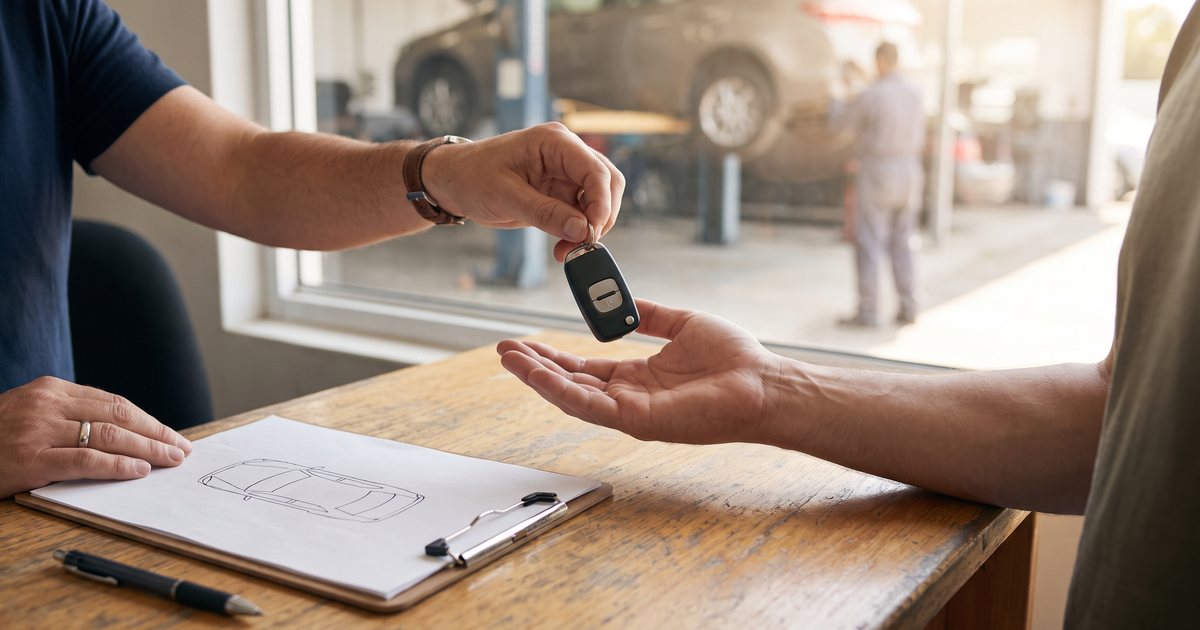
Short answer: In insurance replacement, an insurer (not the driver) usually pays for the rental while the driver's car is repaired. You rent to the claimant under an authorization that caps the daily rate and approved days, document the car's condition, invoice the insurer and chase the balance like any business receivable.
Insurance replacement is the corner of car rental where the person driving your car usually isn't the one paying for it. That single difference changes your paperwork, your pricing and your cash flow.
Last verified: October 2026. This guide describes the U.S. model. Insurer practices differ by company and state rules differ by state, so confirm the details with each insurer you work with.
Key Takeaways
- There are two kinds of payer. The driver's own insurer pays under optional rental reimbursement coverage, at "a set amount each day" up to a dollar limit. When another driver is at fault, that driver's liability insurer pays for the time it considers reasonable for the repair, according to the Texas Department of Insurance.
- The authorization is your real contract. Record the claim number, approved days, daily cap, vehicle class and who pays anything outside those limits before the keys leave.
- Repairs take longer when cars need calibration. CCC data reported in December 2025 put repairs with no calibrations at 13 days keys-to-keys and repairs with multiple calibrations at more than 17. Calibrations appeared on 23% of all repairable appraisals in 2025, up from 0.9% in 2017.
- Money leaks at the edges: days beyond the authorization, upgrades above the cap, and total losses. Texas's consumer guide warns that an insurer "might stop paying for the rental a few days after" telling the driver the car is totaled.
- Treat insurer balances as receivables. Invoice at return, age the balance weekly and escalate early.
Who pays, and why it differs from retail rental
In a retail rental, the person at the counter is your customer twice over: they drive the car and they pay for it, usually by card before they leave. In insurance replacement those roles split. The driver uses the car, while an insurer pays some or all of the bill after the rental ends, at a rate and for a number of days the insurer decides.
Rental coverage is a common optional extra on personal auto policies. The NAIC's consumer guide to auto insurance lists coverage "for towing and rental car when your car is disabled" among the extra coverages most insurers offer. The Texas Department of Insurance's auto insurance guide gives a plain-English description of who pays:
| Situation | Who usually pays | Limit to expect |
|---|---|---|
| The driver has rental reimbursement on their own policy | The driver's insurer | "A set amount each day," up to the policy's rental dollar limit |
| Another driver was at fault | The at-fault driver's liability insurer | Rental for the time the insurer believes is reasonable for the repair |
| The car was stolen, and the driver has rental reimbursement or comprehensive coverage | The driver's insurer | The policy's rental limits |
| The at-fault driver was uninsured, or it was a hit-and-run | The driver's own insurer, under uninsured/underinsured motorist coverage | The policy's rental limits |
| The car is declared a total loss | The paying insurer, briefly | Payment may stop a few days after the driver is told |
| No coverage, or costs beyond the authorization | The driver | Your retail terms |
Texas is one state, and other states' rules and insurers' policies differ, so treat the table as an example of the structure, not a rulebook. That structure has two consequences for you:
- The payer sets your price. The daily cap is what you will be paid, whatever your rack rate says.
- You extend credit. You deliver the rental now and get paid later, so this is business-to-business work with business-to-business paperwork.
Where the work comes from
Body shops, adjusters, claims administrators
Insurance replacement rentals start with a claim. The driver reports an accident or theft, the insurer opens a claim, and the car goes to a repair shop. The people in that chain (the insurer's adjusters and claims staff, the repair shop and the driver) are the ones deciding where the rental goes.
The large national companies built systems for this long ago. Enterprise described its ARMS system, in a 2007 press release, as "a web-based system which was developed for Enterprise that makes insurance replacement rentals easier and more efficient for insurance companies." It said the patent covers systems that let business partners create and manage rental reservations over the internet, and that adjusters using it can monitor the repair status of a customer's vehicle, "which may serve to reduce the duration of the rental." An independent operator doesn't need to copy that system. It needs to deliver the outcomes adjusters and shops care about:
- Speed. Answer the phone, confirm availability the same day, and deliver to the repair shop or the driver's home if you can.
- Status. Tell the adjuster when the car went out, and ask the shop for an estimated completion date you can track.
- A vendor packet. Keep one page ready for adjusters and shops: your rate sheet by vehicle class, delivery area and hours, certificate of insurance and remit-to details.
- Local relationships. Repair shops deal with drivers whose cars are off the road. Visit the shops near you, leave a contact, and keep your delivery promises.
Before you pursue insurer work, ask each insurer or claims administrator how it sets up rental vendors: its vendor application, its rate rules by vehicle class and how it sends authorizations.
Anatomy of an authorization
Claim number, days approved, class and daily cap, policy limits
An authorization is the payer's written permission to rent a car to a named driver, on a claim, within limits. Treat it as the real contract for the money side and capture every field before the keys leave.
| Field | Why it matters | Where to record it |
|---|---|---|
| Claim number and insurer | Every invoice and call is keyed to it | Contract and invoice |
| Adjuster name and contact | Extensions and disputes go through them | Contract notes |
| Insured driver or third-party claimant | Tells you which policy and limits apply | Contract |
| Start date and days approved | Days beyond this are not covered | Contract and a calendar reminder |
| Daily rate cap and what it includes | Whether taxes and fees sit inside the cap or on top | Contract and invoice |
| Vehicle class | Upgrades above the class are the driver's cost | Contract |
| Policy dollar limit | Coverage can run out before the repair is finished | Contract notes |
| Who pays the difference | Extra days, upgrades, fuel, tolls, fines, damage | Signed by the driver |
Get the authorization in writing, by email or through the insurer's portal, and save it with the contract. If the insurer authorizes a different rate or class than you quoted, settle it before pickup. Once the driver has the keys, your leverage is gone.
Extensions deserve the most attention, because repair time depends on what the car needs. CCC data reported by Autobody News in December 2025 found that repairs with no calibrations averaged 13 days keys-to-keys, repairs with one calibration 15.5 days and repairs with multiple calibrations more than 17 days. Repairer Driven News, reporting on CCC's Crash Course, noted that 23% of all repairable appraisals included a calibration in 2025, compared with 0.9% in 2017. More calibration work means more repairs at the long end, and more authorizations that may run out before the car is ready.
Track the authorized end date like a return date. Ask the repair shop for a status update a day or two before it, and request any extension from the adjuster in writing. Texas's consumer guide explains what moves the date: the insurer bases the rental period on "the estimated number of hours of labor" and "might extend the rental if there are delays because the repair shop had to order parts or found more damage." Name the reason when you ask. If the extension is refused, tell the driver right away that further days are at their own cost under your retail terms.
The claimant at the counter
License check, no deposit, documents
Qualify the driver as you would any renter. Check the license, minimum age and identity, and apply your usual risk screening. An insurer paying the bill doesn't change who you're comfortable letting drive.
Decide your deposit policy in advance. Under a direct-bill authorization the insurer pays the covered rental charges, so the driver isn't charged for those. You can still take a card for what the authorization won't cover: extra days, upgrades, fuel, tolls, fines and damage. Tell the driver before they sign. Our guide to managing deposits and security holds covers how holds work, and the companion piece on deposit hold expiry explains why a hold may not last as long as a repair.
Use one clear agreement. It should name the payer and claim number, show the authorized days and cap, list what the driver pays, and explain what happens when the repair finishes or the car is declared a total loss. Ask how damage to your car will be covered during the rental (the driver's own policy, the paying insurer or your fleet policy) and write the answer down.
Set expectations. Tell the driver the authorized end date, that the insurer decides extensions, and that you will call when the shop reports the repair is done.
Evidence: the condition report
In insurance work, the adjuster, the driver and sometimes a second insurer may all read your paperwork weeks later, so make the condition report the strongest document in the file:
- Time-stamped photos of every side, the wheels, the glass, the interior, the odometer and the fuel or charge level, at pickup and at return.
- A damage diagram marked and signed by the driver at both handovers.
- The authorization, extension emails and your call notes, kept in the same file.
- Any damage found at return photographed before the car is moved or cleaned.
Our operator's guide to damage and insurance claims covers damage recovery in more depth.
Billing the insurer
Invoice contents
Send the invoice when the car comes back. For long rentals, ask the insurer whether it accepts interim invoices. Include:
- Claim number, insurer, adjuster and authorization reference
- The insured's and the driver's names
- Vehicle, class and plate
- Dates and times out and in, with days billed and days authorized
- Daily rate, taxes and fees, shown the way the authorization allows
- Extension approvals, with dates and who approved them
- Your remit-to details and invoice number
Bill anything the authorization doesn't cover to the driver on a separate invoice, never on the insurer's. One invoice per claim that matches the authorization line for line gives the payer no reason to send it back.
Payment terms and follow-up
Ask each insurer about its payment process and timing when you set up as a vendor, and put a follow-up date on every open invoice. State rules on claim handling can also tell you when to escalate through the driver. In Texas, for example, the Department of Insurance says an insurer must acknowledge a claim within 15 days of notice, accept or reject it within 15 business days of getting everything it needs (up to 45 days if it needs more time), and pay within five business days after agreeing to pay. Those deadlines protect the policyholder or claimant rather than your invoice directly, but they give the driver a reason to push alongside you.
Short-pays and disputes
A short-pay is a payment below your invoice. Reasons include days beyond the authorization, a rate above the cap, an upgrade, fees outside the coverage, the total-loss cut-off, or a liability dispute between insurers.
- Match the remittance to the invoice and the authorization, line by line.
- If the payer is right because your invoice exceeded the authorization, bill the difference to the driver, provided your agreement says you can.
- If the payer is wrong, appeal in writing with the authorization, the extension emails and the condition report attached.
- Set a threshold below which you write off rather than chase, and record every write-off so you can see which payers cost you most.
Prevention is cheaper than appeals. Confirm the cap and class in writing before pickup, and never let an authorization lapse without either a written extension or a call to the driver.
Cash flow and AR aging
Every insurance replacement rental is a short-term loan from you to an insurer. You pay for the car, its insurance and its downtime now, and you collect later. That works only if you watch receivables as closely as bookings.
- Age every open insurer balance in buckets: 0 to 30, 31 to 60, 61 to 90, and over 90 days.
- Review the list weekly and chase anything past your normal terms.
- Track average days to pay by insurer, and weigh slow payers when you decide how many cars to commit to insurance work.
- Reserve for amounts you may not collect, and review the reserve monthly.
- Keep insurer balances separate from retail card receipts so cash-flow surprises show up early.
CarCEO's accounting includes AR aging with expected-credit-loss provisioning, and our car rental accounting guide explains how receivables, deposits and deferred revenue fit together.
Software checklist
Whatever system you use, insurance replacement needs it to handle:
- A payer on the booking who can differ from the driver
- Claim number, adjuster and authorization fields on both the contract and the invoice
- Authorized days and the daily cap, with a reminder before the authorization ends
- Split billing: covered charges to the insurer, everything else to the driver
- Condition reports with time-stamped photos at pickup and return
- Invoices that show the authorization reference and days authorized versus billed
- AR aging by payer, with a note on every follow-up
- Storage for authorizations, extensions and correspondence
If you run this on spreadsheets today, our software vs. spreadsheets comparison shows what that costs you, and car rental software pricing compares what operators pay for a system.
Terminology by region
US insurance replacement vs UK credit hire vs EU replacement vehicle
The same need, a car while yours is off the road, goes by different names, and the names are not interchangeable:
- United States: "insurance replacement," "replacement rental" or "direct bill."
- United Kingdom: "credit hire."
- Germany and France: "Unfallersatzwagen" and "véhicule de remplacement."
Each market has its own rules on who pays and how rates are set, so treat this guide as U.S.-specific and check local law and industry practice before taking insurer work elsewhere.
Run every rental from one system. Contracts, e-signatures, inspection photos, invoicing and AR aging in one place, free for up to 2 vehicles. Start on the free Starter plan or see how CarCEO works for rental companies.
FAQ
How do I bill an insurance company for a rental car?
Get a written authorization before pickup with the claim number, approved days, daily cap and vehicle class. Rent within it, then send one invoice per claim that matches the authorization line for line, with dates, days, rate, taxes and any approved extensions. Bill anything outside the authorization to the driver separately.
Who pays for a rental car when the other driver was at fault?
Generally the at-fault driver's liability insurer, for the time it considers reasonable for the repair, according to the Texas Department of Insurance's consumer guide. A driver with rental reimbursement coverage can also use their own policy, within its daily and total limits.
What happens to the rental when the insurer totals the car?
Coverage usually ends soon after. Texas's consumer guide warns that an insurer might stop paying for the rental a few days after telling the driver the car is a total loss, so move the driver onto your retail terms or arrange the return.
Should I take a deposit from an insurance replacement customer?
The insurer pays the covered rental charges, but you can still take a card for what the authorization won't cover, such as extra days, upgrades, fuel, tolls, fines and damage, as long as you explain it before the driver signs.
Sources
- Texas Department of Insurance: Auto insurance guide (last updated December 11, 2025), accessed October 2026
- NAIC: A Consumer's Guide to Auto Insurance (2022), accessed October 2026
- Enterprise Rent-A-Car: ARMS patent press release (September 25, 2007), accessed October 2026
- Autobody News: Calibrations surge past 35% of repairs as total losses head toward second straight record (December 17, 2025), accessed October 2026
- Repairer Driven News: CCC Crash Course examines the collision trends of 2025 (December 18, 2025), accessed October 2026
CarCEO is independent software and is not an insurer or insurance broker; it is not affiliated with Enterprise, CCC, NAIC or any insurer named here. This article is operator guidance, not legal or insurance advice.