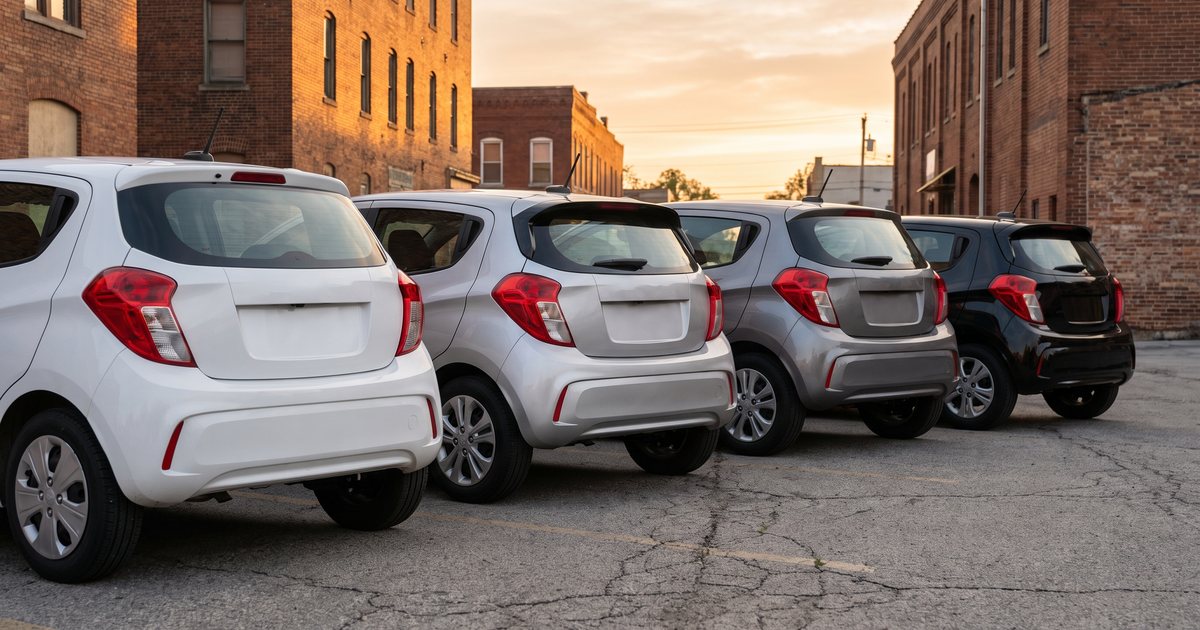
Short answer: A rideshare rental business rents cars to gig drivers by the week, collects rent automatically each week, and protects itself with a clear contract, a deposit or card hold, GPS and the right insurance. Margins depend on utilization and downtime, so model them before buying cars.
Renting cars by the week to rideshare and delivery drivers looks simple: one car, one driver, one payment every week. The real work is in what happens when a payment fails, a car needs service, or a platform changes its rules.
Last verified: October 2026. Platform requirements vary by city and change often, so check each platform's current rules before you put a car on the road.
Key Takeaways
- Check platform rules before you buy a car. Uber's help center says rental vehicles "must be part of an approved partnership" and that use of an unapproved rental car "can result in permanent deactivation," so renting to Uber drivers means becoming an approved partner first. Lyft points drivers without a car to its Express Drive program and requires insurance with the driver's name and the car's VIN on the policy; confirm in writing whether Lyft accepts a car rented from you.
- Insurance changes with the app status. Uber's own coverage is at least $50,000/$100,000/$25,000 while a driver is online and waiting and at least $1 million on a trip. On a trip, its cover for damage to the car is contingent on the driver's own comprehensive and collision coverage.
- Weekly rental, lease and rent-to-own are different legal products. Consumer leases of more than four months for personal use fall under federal Regulation M, and rent-to-own can bring in state rules. Get advice before you sell "rent to own."
- Card holds don't last a week by default. Stripe says an authorization on an online card payment is usually valid for 7 days, so weekly rentals need a plan: extended authorization, re-authorization or a refundable cash deposit.
- Utilization and downtime drive the numbers. In the worked example below, dropping from 85% to 70% utilization cuts annual net per car by almost half.
Weekly rental vs lease vs rent-to-own
There are three ways to put a driver in your car for months at a time. They look alike on a spreadsheet but differ in who carries the risk, which laws apply and what you can promise.
| Model | How it works | Who owns the car at the end | Legal and practical notes |
|---|---|---|---|
| Weekly rental | A rolling weekly term, often with a minimum, that renews until either side gives notice | You | Easiest to start and stop; federal recall rules apply to rental companies with 35 or more rental vehicles |
| Lease | A fixed term, often many months | You, unless there is a purchase option | A consumer lease of more than four months for personal use falls under Regulation M |
| Rent-to-own | Payments build toward the driver owning the car | The driver, once every payment is made | May be treated as a lease, a rental-purchase agreement or a credit sale, depending on structure and state |
Weekly rental is the simplest of the three, because it keeps ownership, pricing and the exit in your hands. One federal rule applies once you are big enough: under 49 U.S.C. 30120(i), a rental company (a fleet averaging 35 or more rental vehicles) that receives a recall notice for a covered rental vehicle may not rent it until the remedy is made, with limited exceptions. Covered means 10,000 pounds or less, rented without a driver for an initial term under four months, which describes a weekly rental.
A lease locks both sides into a longer term. Federal Regulation M defines a consumer lease as one for the use of personal property by a natural person "primarily for personal, family, or household purposes, for a period exceeding four months," up to a dollar threshold. Whether a gig driver's agreement counts as personal use is a fact question for your lawyer.
Rent-to-own needs the most legal care of the three. Once payments build toward ownership, the agreement may be regulated as a rental-purchase agreement, a lease or a credit sale, each with its own disclosure, title and repossession rules. If you want to offer it, have counsel structure it before you advertise it.
Unit economics worksheet
There are no honest market averages for this business, so this is arithmetic, not a forecast: every input is an illustrative assumption to replace with your own.
| Line | Illustrative input | Where your number comes from |
|---|---|---|
| Weekly rent | $300 | Your local rate card |
| Utilization | 85% of weeks rented | Your history, or a cautious guess for new cars |
| Annual revenue | $300 × 52 × 85% = $13,260 | Weekly rent × 52 × utilization |
| Depreciation | $3,000 | Purchase price minus expected resale, divided by years kept |
| Insurance | $2,400 ($200 a month) | Your written quote for this exact use |
| Maintenance and tires | $1,200 | Your service records at gig-driver mileage |
| Registration, permits and inspections | $300 | Your state and city requirements |
| Tracker and data plan | $120 | Your GPS hardware and SIM costs |
| Card processing (3% of revenue) | $398 | Your processor's actual rate |
| Bad debt and losses (5% of revenue) | $663 | Your collection history |
| Cleaning, turnover and admin | $500 | Your staff time between drivers |
| Annual net before financing and overhead | $4,679 | Revenue minus every cost line |
Now change one input. At 70% utilization, revenue falls to $10,920, processing to $328 and bad debt to $546, and annual net drops to $2,526, about 46% less than at 85%. Financing costs, if you borrow to buy cars, and your own overhead still have to come out of that figure.
Assumptions you must replace with your own numbers
- One driver per car at a time, with no gaps beyond the utilization rate.
- You pay for maintenance and tires; the driver pays fuel or charging.
- No mileage-overage revenue, late fees or other extras.
- Insurance at the quoted premium, with no claims surcharge.
- No financing costs, and no cost for your own time.
If the business only works with every assumption at its most optimistic, it doesn't work. The car rental profitability guide walks through the same cost lines for a general fleet.
Insurance and compliance
Start with eligibility, not insurance. Uber's help center says "rental vehicles must be part of an approved partnership in order to be used on the Uber platform" and that "use of an unapproved rental car can result in permanent deactivation"; it points drivers to approved rental options in its Vehicle Marketplace. Before you buy cars for Uber drivers, ask Uber how to become an approved vehicle partner in your city, and get Lyft's position on third-party rentals in writing.
Personal vs rideshare endorsements
Who insures the car depends on what the app is doing. Uber's insurance page, checked October 2026, describes it this way:
- Offline: "Your personal auto insurance covers you while you're offline. You must maintain personal automobile insurance at mandatory minimum limits."
- Online and waiting for a request: third-party liability of at least $50,000 per person and $100,000 per accident for injuries, and $25,000 for property damage.
- En route or on a trip: third-party liability of at least $1,000,000.
- Damage to the car (en route or on a trip): cover up to actual cash value with a $2,500 deductible, "contingent on your personal insurance including comprehensive and collision coverage."
Uber adds that its coverages and limits vary by state and have changed over time. For you, as the owner of the car, that raises three questions to answer in writing before the first rental:
- Whose policy covers the car when the app is off? Lyft's requirements are explicit: drivers need "current and valid insurance with your name and VIN on the policy." If Lyft accepts the car at all, that means a driver renting your car needs a policy in their own name that lists your car's VIN, with whatever rideshare endorsement their insurer requires. Check the equivalent rule on every platform you allow.
- Who repairs your car after an on-trip crash? If the platform's damage cover depends on the driver's comprehensive and collision coverage, confirm the driver has it, or carry physical-damage cover yourself.
- Does your commercial policy allow renting to rideshare drivers at all? Ask your insurer directly, and get the answer on paper.
Federal law gives rental owners one protection here. The Graves Amendment, 49 U.S.C. 30106, says an owner in the business of renting or leasing vehicles is not liable just for being the owner, for harm arising from the vehicle's use during the rental, if the owner wasn't negligent or engaged in criminal wrongdoing. It does not override state financial-responsibility and insurance requirements, so it is no substitute for insurance.
Plan for EVs. Uber's stated goal is for 100% of rides in the U.S., Canada and Europe to be zero-emission by 2030. In California, the Clean Miles Standard sets an annual increase in the share of zero-emission passenger miles that ride-hailing companies such as Uber and Lyft must meet. If you are planning purchases for 2027 and beyond, ask the platforms what EV programs they run in your city, and think about where drivers without home charging will charge. Our EV fleet management guide covers running EVs in a rental fleet.
Contract terms checklist
Weekly mileage, payment day, late fees, maintenance, GPS, return condition
- Term and renewal: minimum term, weekly renewal and the notice period for either side.
- Payment day and method: a fixed weekday, a card on file and a receipt every week.
- Late payment: grace period, late fee, and when the car must come back.
- Mileage: a weekly allowance with an overage rate, or unlimited miles at a higher rent.
- Permitted use: which platforms the car may be used on, and no subletting or unlisted drivers.
- Insurance duties: what the driver must carry, proof (a declarations page that lists the VIN) and notice of any change.
- Maintenance: who pays for oil, tires and wear items, service windows, and whether rent pauses while the car is in the shop.
- Accidents and claims: reporting deadline, police report, photos and cooperation with insurers.
- Tolls, tickets and fines: who pays and how you pass them through.
- GPS disclosure: that the car is tracked, why, and who sees the data.
- Deposit: amount, what it covers and when it is refunded.
- Return condition: inspection photos at every handover.
- Termination: what happens after missed payments, in steps your lawyer has approved.
The clause-by-clause car rental agreement template covers the general clauses; the list above is what weekly gig-driver rentals add.
Collecting weekly payments
Auto-billing and failed payments
Weekly rentals live or die on collection. Charge on a fixed weekday, send a receipt every time, and follow a written routine when a payment fails:
- Retry the card the same day or the next.
- Notify the driver of the amount and a deadline.
- Apply a late fee only as your contract allows.
- If the deadline passes, follow your termination steps and keep a record of each one.
Recurring billing takes most of this off your desk. CarCEO runs a weekly rental as one rolling contract: a minimum term, then weekly renewals until someone gives notice, with each week extended and invoiced on the same contract. If you switch on auto-charge, it charges the renter's saved card each cycle; a declined charge pauses billing and leaves that week's amount on the invoice for collection. Our guide to weekly and monthly rentals with recurring billing explains the cash-flow side.
Deposits
A deposit covers what weekly rent doesn't: damage, tolls and fines that arrive late, and the last week if a driver disappears. The catch is timing. Stripe's documentation says an authorization on an online card payment is usually valid for 7 days, and it offers extended authorizations that can be captured up to 30 days after authorization for eligible payments. A hold placed at pickup therefore won't last a three-month rental.
Three workable approaches:
- A refundable security deposit collected as a payment, with written refund terms and timing.
- A re-authorized hold that you renew before each expiry, accepting that a renewal can fail.
- An extended authorization where the card and your account qualify, for rentals of up to about a month.
Our companion guide on deposit hold expiry and extended authorization covers each option in detail, and managing deposits and security holds covers amounts and disputes.
Keeping cars productive
Maintenance and downtime
Rideshare and delivery work can add miles quickly, so schedule service by mileage, not the calendar. Track odometer readings at every payment cycle, book service before it's due, and agree in the contract whether rent pauses while a car is in the shop. Keep a spare car if you can afford one: a driver without a car stops paying and may not come back. Check recalls by VIN before each new driver takes a car. Our maintenance scheduling guide covers intervals and tracking.
Exit and repossession risk
Rental-purchase laws vary - consult counsel
Plan the end of the relationship before it starts:
- Missed payments: define the steps (notice, deadline, return of the car) in the contract, and follow them exactly.
- Recovering a car: the rules on recovering a vehicle differ by state. Agree your process with a lawyer before you need it, and never improvise one.
- Rent-to-own exits: if payments build equity, a default may give the driver rights you don't have in a plain rental. This is the strongest reason to get counsel before offering rent-to-own.
This section is general information, not legal advice; rules differ by state.
Software requirements
A weekly gig-driver fleet needs software that handles:
- Rolling weekly terms, automatic invoicing and card charging, with failed-payment alerts
- Deposits and card holds with expiry tracking
- Weekly mileage allowances, GPS and odometer-based maintenance
- Storage for licenses and insurance declarations
- Collections and per-vehicle profit and loss
Running it on spreadsheets? See our software vs. spreadsheets comparison, the fleet management overview and car rental software pricing. Weighing monthly plans instead? Read about car subscription models.
Weekly rolling terms with automatic billing. CarCEO runs weekly rentals as rolling contracts that extend and invoice every week, with optional auto-charge, card deposit holds, weekly mileage allowances and GPS tracker integrations. It's free for up to 2 vehicles. Start on the free Starter plan.
FAQ
Is renting cars to rideshare drivers profitable?
It can be, but it depends on your utilization, purchase price, insurance quote and collections, not on market averages. Model your own numbers with a worksheet like the one above, then test how much a lower utilization rate or a bad-debt month changes the result.
Can Uber or Lyft drivers use a car rented from a local company?
On Uber, only if the rental comes through an approved partner: Uber's help center says rental vehicles "must be part of an approved partnership" and that use of an unapproved rental car "can result in permanent deactivation." Lyft offers its own Express Drive rentals and requires insurance with the driver's name and the car's VIN, so confirm in writing whether it accepts a car rented from you. Ask each platform how to become an approved vehicle partner in your city before you buy.
What insurance do I need to rent cars to rideshare drivers?
A commercial policy that explicitly allows this use, plus a clear answer on who covers the car in each app status. Uber's own coverage applies while a driver is online or on a trip, and its damage cover, which applies en route or on a trip, depends on the driver's comprehensive and collision coverage, so get your insurer's answer in writing.
How much deposit should I take for a weekly rental?
Enough to cover your realistic exposure: a week of rent, typical tolls and fines, and your damage deductible. Remember that card holds usually expire after 7 days, so for long rentals use a refundable deposit or plan to re-authorize.
Sources
- Lyft Help: Driver requirements, accessed October 2026
- Uber Help: Can I use a rental car to drive?, accessed October 2026
- Uber: Driver requirements (US), accessed October 2026
- Uber: Vehicle solutions and Vehicle Marketplace, accessed October 2026
- Uber: Rideshare insurance for drivers, accessed October 2026
- Uber: Sustainability commitments, accessed October 2026
- California Air Resources Board: Clean Miles Standard, accessed October 2026
- 49 U.S.C. 30106, rented or leased motor vehicle safety and responsibility (Cornell LII), accessed October 2026
- 49 U.S.C. 30102, definitions (Cornell LII), accessed October 2026
- 49 U.S.C. 30120, remedies for defects and noncompliance (Cornell LII), accessed October 2026
- CFPB: Regulation M, 12 CFR 1013.2 definitions, accessed October 2026
- Stripe Docs: Place a hold on a payment method, accessed October 2026
- Stripe Docs: Place an extended hold on an online card payment, accessed October 2026
CarCEO is independent software and is not affiliated with Uber, Lyft or Stripe. This article is operator guidance, not legal, tax or insurance advice, and it makes no promise of income.